 617.938.6200
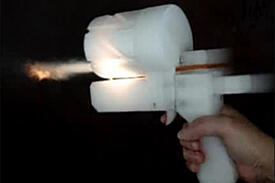 A Japanese man, 28 year old Yoshitomo Imura, has been jailed for two years for the crime of making 3D-printed guns and instructing others about the process. Imura, who used to work for the Shonan Institute of Technology, reportedly made several guns, and also put a video online showing how he did it. Imura’s design was known as the ZigZag, a revolver that can take six .38 caliber bullets. Japan has very strict gun laws, and, following his arrest in May, Imura was sentenced for producing and possessing two functional firearms.

 Meraki (may-rah-kee) is a Greek word that means doing something with passion and soul. This is the core principle behind the networking corporation formed in 2006 by MIT PhD students Sanjit Biswas, John Bicket and Hans Robertson. Meraki was recently purchased by Cisco for around $1.2 billion in cash. The company initially focused its attention on consumers and building municipal Wi-Fi networks, including one in San Francisco. When that proved to be a false start, Meraki shifted gears and started focusing on hotels in emerging markets, apartment complexes and eventually on the corporate market.
 In one our previous articles (
 Unknown hackers are responsible for the leak of over 500MB images of Snapchat users. Videos and pictures of over 200,000 users were released on the Internet just a few days ago. Even if it has not been proven, it is suspected that the authors of the scam are somehow linked to those responsible for the posting in August of personal and often nude photos taken by hundreds of celebrities, including Jennifer Lawrence and Kim Kardashian.
 Last Tuesday, a trio of Google researchers published news regarding the existence of an Internet-wide security vulnerability that has a cute name but unfortunately also potentially disastrous effects. POODLE, which stands for Padding Oracle On Downgraded Legacy Encryption, is a new security hole that targets Secure Socket Layer (SSL) 3.0. Since SSL protects data that are in transit between a website and the users, POODLE potentially allows hackers to decrypt the HTTP cookies, which can be used to store personal information, website preferences or even passwords, depending on the situation. For example, POODLE could allow an attacker to hijack and decrypt the session cookie that identifies you to a service like Twitter or Google, and then take over your accounts without needing your password.